How It Works
How Does The Genius Switch Work?
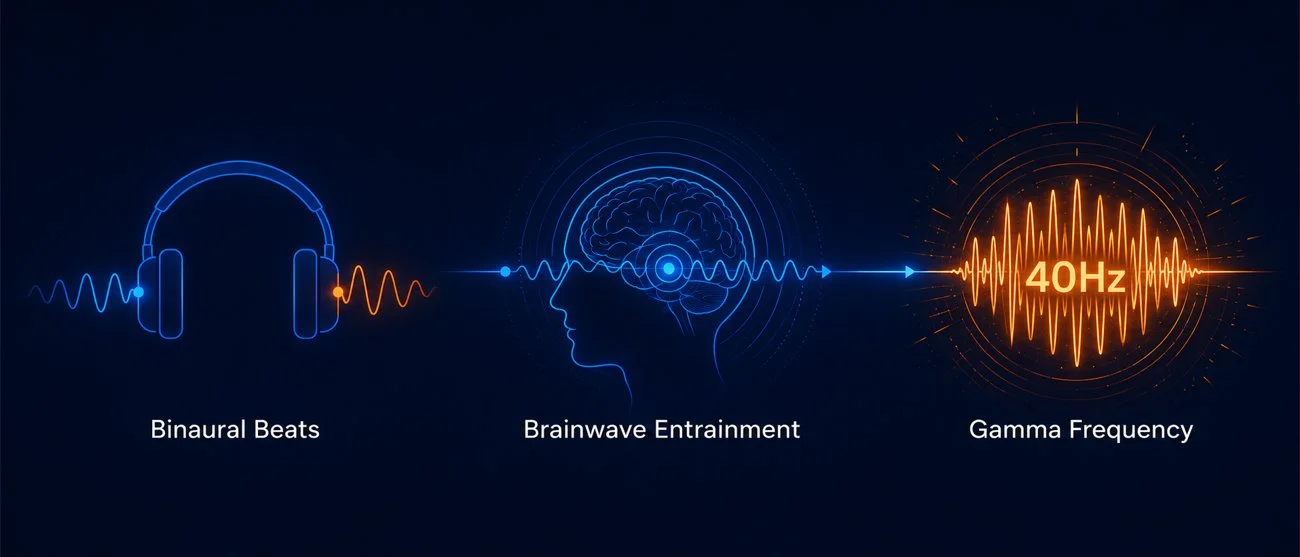
The Genius Switch is designed around a simple idea: use structured audio to influence the brain's response to rhythmic sound patterns. The program's promotional material describes the use of binaural beats, isochronic tones, and brainwave-entrainment principles, with different pages emphasizing gamma-related or other brainwave frequencies.
1
The Audio Delivers Carefully Structured Frequencies
The first part of the process happens through the audio itself.
The Genius Switch is presented as using specifically designed sound patterns rather than ordinary background music. Depending on the product version or promotional material, these descriptions refer to binaural beats, isochronic tones, gamma-related stimulation, or broader brainwave-entrainment techniques.
The purpose of these sound patterns is to provide a consistent rhythmic stimulus while you listen.
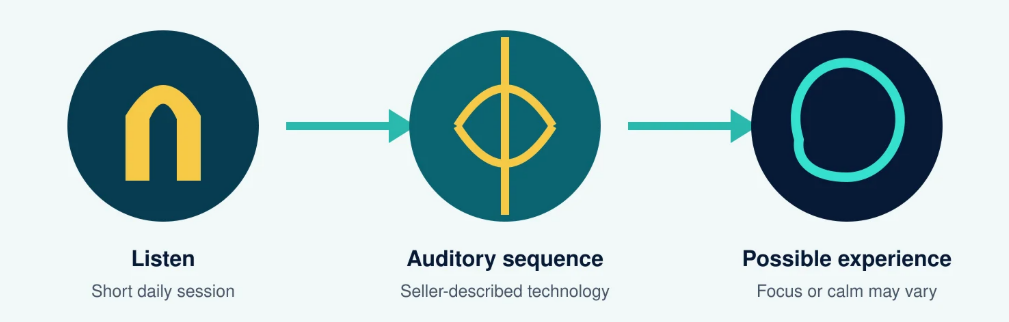
From the user's perspective, there is no complicated setup. You simply start the session and allow the audio to play.
2
Different Sounds Can Be Delivered to Each Ear
One of the key technologies discussed in connection with The Genius Switch is binaural beats.
With binaural audio, slightly different frequencies can be delivered separately to the left and right ears through stereo headphones.
For example, if one ear receives a 200 Hz tone and the other receives a 210 Hz tone, the auditory system perceives a difference between those frequencies. That perceived difference is what is commonly referred to as a binaural beat.
The important point is that the listener doesn't need to understand the mathematics behind the frequencies. The audio has already been created to provide the intended stimulus.
3
The Brain Processes the Rhythmic Difference
Once the two signals reach the ears, the auditory system processes them together.
This creates the perception of a rhythmic beat corresponding to the difference between the two tones.
This is one reason headphones are particularly relevant when binaural beats are being used. Each ear needs to receive the appropriate audio signal independently.
Binaural beats themselves are not unique to The Genius Switch. They have been studied and used in a variety of audio applications involving relaxation, attention, meditation, and concentration. Research findings are mixed, however, with some studies reporting modest effects and others finding little or no meaningful difference.
4
Brainwave Entrainment Becomes the Central Concept
The next part of the proposed mechanism is brainwave entrainment.
In simple terms, brainwave entrainment refers to the possibility that rhythmic external stimulation can influence the timing or synchronization of neural activity.
This is the scientific concept that connects the audio technology to the product's mental-performance positioning.
The Genius Switch's promotional material describes the audio as encouraging the brain to move toward patterns associated with focus, clarity, creativity, or other desired mental states.
However, it is important not to confuse a measurable response to rhythmic stimulation with a guaranteed improvement in intelligence, memory, or productivity.
Those are separate claims.
5
The Program Targets Particular Brainwave States
The product's different promotional pages refer to different frequency ranges and mental states.
Some versions specifically emphasize gamma activity, particularly around the 40 Hz range, while other product pages discuss alpha or theta states in relation to relaxation, creativity, and focus.
This variation is worth knowing if you're researching the product because not every promotional page describes the mechanism in exactly the same way.
The broader idea is that different patterns of brain activity are associated with different mental conditions. The program attempts to use sound as an external rhythmic stimulus to support a desired state.
The important word here is influence.
The program is not literally switching intelligence on or changing the brain into a completely different state instantly. Instead, its audio is designed to provide rhythmic stimulation that may help create a particular listening environment associated with focus or relaxation.
 Daniel R.Austin, Texas
Sample review
 Melissa T.
 Kevin M.